Vietnam is a land of breathtaking contrasts—from the mist-shrouded mountains of Sapa and the chaotic, neon-lit streets of Ho Chi Minh City to the serene, limestone karsts of Ha Long Bay. It is a destination that rewards the curious and the adventurous. However, for many travelers, the excitement of a looming trip can quickly turn into anxiety when they realize they’ve overlooked one crucial detail: the entry visa.
Whether you are a business professional with a last-minute meeting in Hanoi or a backpacker who just snagged a flash-sale flight to Da Nang, the need for an urgent evisa Vietnam is a common reality. While the standard 30-day or 90-day visa process is straightforward, the “urgent” factor requires a specialized approach.
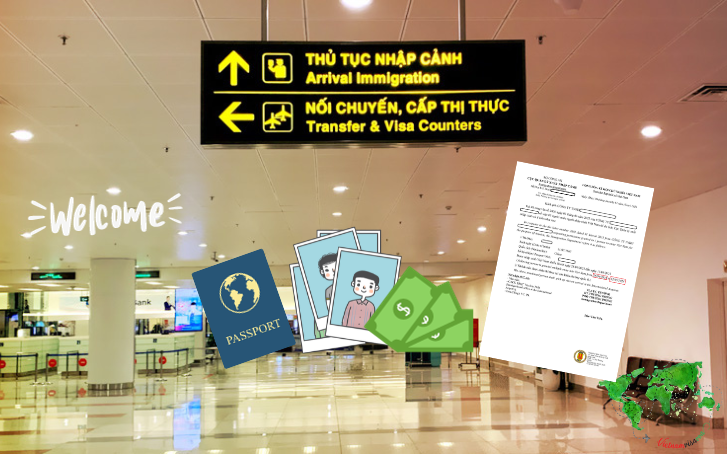
In this guide, we will break down everything you need to know about obtaining a 30 days Vietnam visa (and the newer 90-day options) through an expedited process, ensuring your journey begins with peace of mind rather than a frantic scramble at the boarding gate.
1. Understanding the Vietnam E-visa System
For years, travelers had to navigate the “Visa on Arrival” (VOA) process, which involved approval letters and waiting in long queues at the airport to pay a stamping fee. Today, the Electronic Visa (E-visa) has become the primary and most efficient method for entry.
What is the 30 Days Vietnam Visa?
Historically, the most requested duration for tourists was the 30 days Vietnam visa. It allowed for a single entry and gave travelers exactly one month to explore the country.
Important Update: As of late 2023, the Vietnamese government expanded the E-visa program. While many travelers still search for a “30-day” solution, the current E-visa actually allows for stays of up to 90 days with options for both single and multiple entries. This flexibility is a game-changer, but the “urgent” requirement remains the same for those who wait until the last minute.
Who is Eligible?
Currently, citizens from all countries and territories are eligible to apply for a Vietnam E-visa. This inclusivity has made Vietnam one of the most accessible destinations in Southeast Asia, provided you have your paperwork in order before you fly.
2. Why You Might Need an Urgent E-visa Vietnam
Travel is rarely a linear path. Despite our best intentions, “emergency” visa needs arise for several reasons:
- The “Oops” Moment: You realized 48 hours before your flight that your nationality is not on the visa-exemption list.
- The Typo Trap: You applied on the official government portal, but your visa was rejected or “put under processing” because of a minor typo in your passport number or a cropped photo.
- The Business Pivot: An unexpected deal requires your presence in Vietnam for a face-to-face meeting within the next two days.
- The Flight Deal: You found an irresistible last-minute flight deal and didn’t realize the standard visa processing time is 3 to 5 working days.
In these scenarios, the standard government processing time is simply too slow. This is where an urgent evisa Vietnam service becomes your most valuable travel asset.
3. Standard vs. Urgent Processing: The Reality Check
When applying through the official government portal, the fine print usually states a processing time of 3 working days. However, in reality, this can stretch to 5 or 7 days during peak tourist seasons or around Vietnamese public holidays (like Tet or Independence Day).
| Feature | Standard Government Portal | Entryvietnamvisa.com Urgent Service |
| Processing Time | 3–7 Working Days | 4 hours, 1 day, or 2 days |
| Customer Support | Minimal/No response | 24/7 Live Support |
| Error Correction | Requires a new application/fee | Double-checked by experts before submission |
| Success Rate | Subject to automated rejections | High (Human-vetted) |
4. How to Apply for an Urgent E-visa on Entryvietnamvisa.com
We have streamlined the process to ensure that even in a high-stress situation, your application is flawless. Here is the step-by-step breakdown:
Step 1: Choose Your Timeframe
Determine how quickly you need the visa. We offer several tiers of “urgency”:
- Emergency (4–8 working hours): For those flying within the next 24 hours.
- Express (1 working day): For those flying tomorrow.
- Fast Track (2 working days): For those who want to be safe but have a little breathing room.
Step 2: Provide Your Information
You will need to upload a clear scan of your passport bio page and a recent passport-sized photo (white background, no glasses). You will also need to specify your:
- Expected date of entry.
- Port of entry (e.g., Noi Bai Airport, Moc Bai Landport).
- Temporary address in Vietnam (a hotel name is sufficient).
Step 3: Payment and Verification
Once you submit your “urgent evisa Vietnam” request and complete the payment, our team of experts immediately reviews your data. We look for the common mistakes that cause government rejections, such as inverted names or incorrect ICAO lines.
Step 4: Receive Your Visa via Email
Once approved, we send the E-visa PDF directly to your inbox. You simply print it out (or keep a digital copy, though printing is highly recommended) and present it at the immigration counter.
5. Common Pitfalls to Avoid (Expert Tips)
Even with an urgent evisa Vietnam service, the quality of the information you provide is paramount. Here are the top reasons applications get delayed:
- Poor Photo Quality: The photo must be a clear, digital version. Do not take a photo of a physical photo with your phone—this often creates a “moiré” pattern or glare that the immigration AI will reject.
- Full Name Mismatch: Your name must exactly match the “Machine Readable Zone” (the two lines at the bottom of your passport page). If your name is Johnathan Doe, don’t write John Doe.
- Passport Expiry: Your passport must be valid for at least 6 months from your date of entry. If it expires in 5 months, an E-visa will not be issued, and you will not be allowed to board your flight.
- Incorrect Entry Point: Unlike some other countries, a Vietnam E-visa is sometimes tied to a specific port of entry. While there is more flexibility now, it is best to enter through the port listed on your visa to avoid any “administrative friction.”
6. Where Can You Enter with a 30 Days Vietnam Visa?
The Vietnam E-visa is accepted at a wide variety of entry points, including:
- International Airports: Hanoi (Noi Bai), Ho Chi Minh City (Tan Son Nhat), Da Nang, Cam Ranh (Nha Trang), Phu Quoc, and more.
- Land Ports: For those traveling from Cambodia, Laos, or China (e.g., Moc Bai, Lao Bao, Huu Nghi).
- Seaports: For travelers arriving via cruise ships (e.g., Da Nang Port, Hon Gai Port).
Note: If you are arriving via a land border, an urgent visa is even more critical, as land-border officials have zero tolerance for missing paperwork.
7. The Value of Choosing Entryvietnamvisa.com
Why use a service like ours when a government portal exists? The answer lies in risk management.
- Human Oversight: Our team knows the “unspoken rules” of the Vietnamese Immigration Department. We ensure your application is formatted in a way that minimizes the chance of a “Request for Modification,” which can kill an urgent timeline.
- Language Barrier: Navigating a foreign government website can be confusing. We provide clear, English-language support to answer every “what if” you might have.
- Reliability: When you have a $1,000 flight on the line, the small service fee for an urgent evisa Vietnam is essentially an insurance policy for your trip.
8. Frequently Asked Questions (FAQs)
Can I extend my 30 days Vietnam visa once I’m inside the country?
Currently, E-visa extensions within Vietnam are complex and often require you to do a “visa run” (leaving the country and re-entering). This is why the new 90-day E-visa is highly recommended even if you only plan to stay for 30 days—it gives you a buffer.
What if my visa has a mistake?
If you used the government portal and found a mistake, you cannot “edit” it. You must apply for a new visa. If you are in a rush, this is when you should contact us for an urgent evisa Vietnam to fix the error and get a valid visa in hours.
Do children need their own E-visa?
Yes. Every traveler, including infants with their own passports, must have a valid E-visa. If a child is included in a parent’s passport, their information must be included in the parent’s E-visa application.
Is the E-visa valid for 30 days or 1 month?
The visa is valid for the specific dates printed on the document. If your visa is valid from January 1st to January 30th, you must depart by the 30th. It is not a “rolling” 30 days from whenever you decide to show up.
9. Preparing for Your Arrival
Once you have your urgent evisa Vietnam in hand, the rest is easy. When you land at the airport:
- Follow the signs for “Passport Control” or “Immigration.”
- Have your passport and a printed copy of your E-visa ready.
- The officer will stamp your passport with your permitted stay date.
- No additional stamping fees are required at the airport for E-visas.
Conclusion: Don’t Let Paperwork Stop Your Adventure
Vietnam is a country that stays with you long after you leave. The smell of street-side pho in the morning, the sight of thousands of motorbikes flowing like a river through Saigon, and the quiet dignity of the ancient temples in Hue are experiences that shouldn’t be missed due to a clerical oversight.
If you find yourself in a bind, remember that an urgent evisa Vietnam is not just a document—it’s your ticket to a stress-free start to your holiday. Whether you need a 30 days Vietnam visa or a longer-term stay, Entryvietnamvisa.com is here to bridge the gap between “Oh no!” and “Welcome to Vietnam!”
Ready to get your visa processed in record time? Visit our application page now and let our experts handle the bureaucracy while you start packing your bags.